


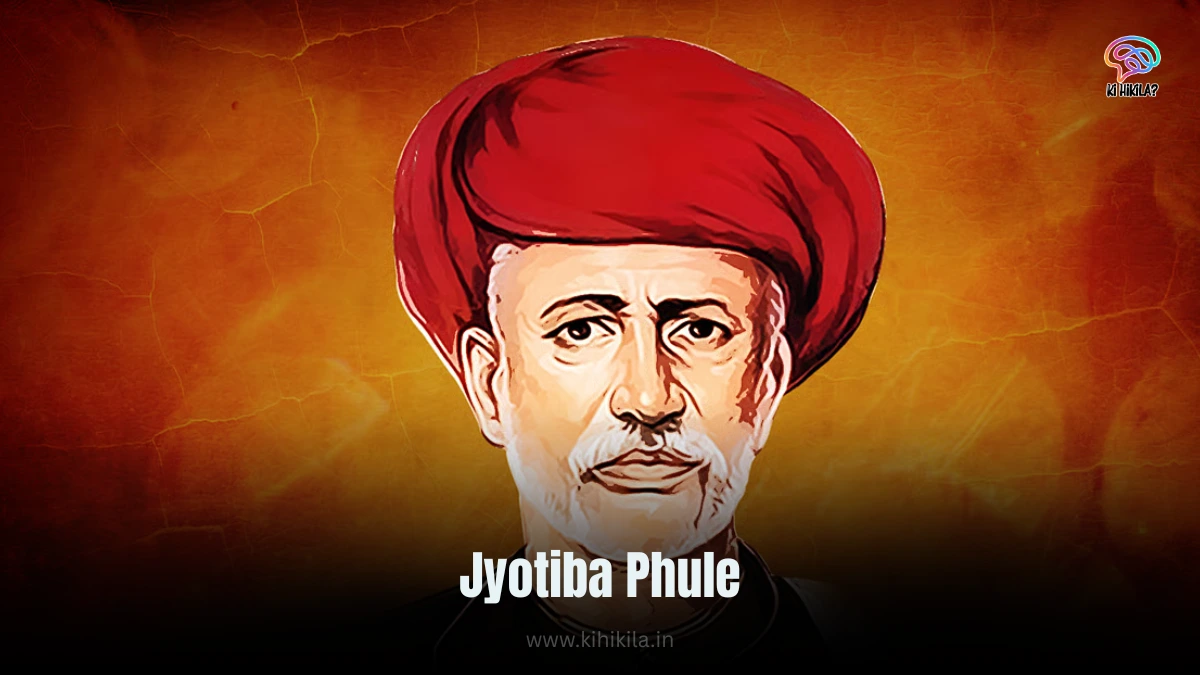
Jyotiba Phule Biography: Inspiring Social Reforms, Contributions & Legacy

About Jyotiba Phule
Jyotiba Phule, also known as Mahatma Jyotirao Govindrao Phule, was a prominent 19th-century social reformer, thinker, and activist who dedicated his life to fighting against social injustice, caste-based discrimination, and gender inequality in India. Born in 1827 in Maharashtra, he emerged as a revolutionary leader who challenged the rigid caste system and worked towards creating an equal and just society.
Thank you for reading this post, don't forget to subscribe!Phule believed in the importance of education as a tool to uplift the marginalized sections of society. Along with his wife, Savitribai Phule, he pioneered girls’ education in India and founded schools for women and children from oppressed communities at a time when education was considered a privilege of the upper castes.
His efforts were not limited to education; he actively campaigned for widow remarriage, fought against child marriage, and opposed untouchability. Through his literary works and social movements, Phule laid the foundation for progressive reforms in Indian society. His philosophy inspired future generations of reformers and continues to remain relevant in the fight for equality and human rights.
Mahatma Jyotiba Phule Jayanti
Mahatma Jyotiba Phule Jayanti is observed every year on 11th April to honor the birth anniversary of one of India’s greatest social reformers. This day is celebrated across Maharashtra and other parts of India with respect, remembrance, and various cultural and educational programs that highlight his contribution to society.
The celebration of Jyotiba Phule Jayanti is not only a tribute to his legacy but also a reminder of his tireless struggle against caste-based oppression, untouchability, and gender inequality. Educational institutions, social organizations, and government bodies often conduct seminars, awareness drives, and community gatherings on this occasion to spread his ideology and inspire future generations.
In Maharashtra, the day holds special significance, as processions, garlanding of his statues, and public events are organized to remember his pioneering efforts in promoting social justice and equality. For students preparing for competitive exams, Jyotiba Phule Jayanti is also an important date to remember as it reflects the broader social reform movements in colonial India.
Who was Jyotiba Phule?
Jyotiba Phule, often revered as Mahatma Jyotiba Phule, was one of the earliest and most influential social reformers in India. He is remembered as a visionary who challenged the entrenched caste system, patriarchal norms, and the denial of education to marginalized groups. Born into a family belonging to the Mali caste, considered “lower caste” at that time, he experienced discrimination firsthand, which deeply influenced his reformist outlook.
He was not only a reformer but also a pioneer of modern Indian thought, advocating for equality, human dignity, and justice. Jyotiba Phule’s mission went beyond addressing caste discrimination—he also sought to liberate women from centuries of oppression. By opening schools for girls and untouchables, he laid the foundation for inclusive education in India.
His work inspired future reformers like Dr. B.R. Ambedkar, who carried forward the struggle for social justice. Today, Phule is recognized as a leader who envisioned a society free from caste hierarchies and gender-based inequality, making him a central figure in India’s social reform movement.
Jyotiba Phule Biography
Jyotiba Phule, born as Jyotirao Govindrao Phule on 11th April 1827 in Satara district of Maharashtra, was a reformer, educationist, and social activist whose life’s work reshaped Indian society. Belonging to the Mali community, he grew up in a period when caste-based restrictions and social inequality were deeply rooted in Indian culture. Despite these challenges, he emerged as a fearless voice against injustice.
His father, Govindrao, was a vegetable and flower vendor. The family faced constant social exclusion because of their caste status, but Jyotiba’s determination and intellect allowed him to overcome barriers. He married Savitribai Phule in 1840, who later became his strongest partner in social reform, particularly in the field of women’s education. Together, they opened India’s first school for girls in Pune in 1848, a groundbreaking step during a time when women were denied basic education.
Throughout his life, Phule wrote extensively, criticizing Brahmanical dominance and advocating for the upliftment of lower castes, women, and oppressed communities. He also founded the Satya Shodhak Samaj (Society of Seekers of Truth) in 1873, an organization that worked towards equality and eradication of social evils.
Jyotiba Phule’s biography is a story of courage, resilience, and unwavering commitment to social change. His legacy continues to be celebrated as a symbol of resistance against discrimination and as a foundation for progressive reforms in India.
Early Life and Education
Jyotiba Phule was born into a family of the Mali community, traditionally engaged in gardening and agriculture. His early childhood was marked by the hardships of caste-based exclusion, yet his intellectual abilities caught the attention of community elders. Despite opposition from orthodox sections of society, Jyotiba was given the opportunity to pursue formal education—an unusual privilege for someone from his background in the 19th century.
He attended a Scottish Mission High School in Pune, where he was introduced to modern Western ideas of liberty, equality, and justice. These values shaped his thought process and fueled his determination to challenge social inequalities. His exposure to literature on world history and social struggles gave him a broader understanding of systemic oppression, which he later applied to Indian society.
Phule’s education not only sharpened his critical thinking but also gave him the confidence to question traditions that perpetuated caste hierarchies and gender discrimination. It was during these formative years that he realized the transformative power of education—an idea that would become central to his reformist work.
Ideology of Mahatma Jyotiba Phule
The ideology of Mahatma Jyotiba Phule centered on social equality, justice, and education as the foundation of empowerment. He believed that the deeply entrenched caste system and patriarchy were the root causes of India’s backwardness, and to reform society, these barriers had to be dismantled.
At a time when the majority accepted caste hierarchies as divine order, Phule boldly declared them to be man-made injustices. He argued that the so-called upper castes used religion and tradition as tools to exploit and dominate lower castes and women. His writings, such as Gulamgiri (Slavery), strongly criticized Brahmanical dominance and sought to awaken the oppressed classes.
Phule emphasized education as a revolutionary tool that could break the cycle of ignorance and oppression. He firmly believed that literacy among women and marginalized communities was essential for creating a just society. By advocating widow remarriage, opposing child marriage, and promoting rational thinking, he tried to liberate society from regressive practices.
In essence, his ideology was rooted in the principles of human dignity, equality, and social transformation. His progressive thoughts made him a pioneer of modern social reform movements in India and an inspiration for later leaders like Dr. B.R. Ambedkar.
Jyotiba Phule’s Contribution to Education
Education was at the heart of Jyotiba Phule’s reformist movement. He firmly believed that the upliftment of oppressed castes and women could only be achieved through literacy and knowledge. At a time when education was considered the privilege of upper castes, Phule envisioned it as a universal right that must be accessible to all, irrespective of caste, class, or gender.
In 1848, Phule, along with his wife Savitribai Phule, established the first school for girls in Pune. This was a historic step, as it challenged the prevailing belief that women had no role in education. Savitribai herself became the first female teacher of the school, symbolizing women’s empowerment in a society that largely confined them to domestic roles.
Phule didn’t stop there—he also set up schools for children from marginalized communities, including Dalits and Shudras, who had been historically denied learning opportunities. His schools emphasized practical education and moral values, focusing not just on literacy but also on building self-respect and awareness among students.
Through these pioneering efforts, Jyotiba Phule became known as the father of India’s social education movement. His vision laid the foundation for inclusive learning and inspired generations of reformers to continue the struggle for educational equality in India.
Important Literature of Jyotiba Phule
Jyotiba Phule was not only a reformer but also a prolific writer whose works became powerful tools for social awakening. His writings strongly criticized caste oppression, gender inequality, and the misuse of religion to maintain social hierarchies. They provided both intellectual and moral strength to the reformist movements of his time.
Some of his most significant literary contributions include:
- Gulamgiri (Slavery), 1873 – Considered his most famous work, it drew parallels between the oppression of lower castes in India and slavery in America. Phule dedicated this book to the people of the United States who fought against slavery.
- Shetkaryacha Asud (Cultivator’s Whipcord), 1881 – A powerful critique of the exploitation faced by farmers and peasants under the traditional caste order and colonial rule.
- Sarvajanik Satya Dharma (Universal Religion of Truth) – An attempt to create a new social and moral code based on equality, justice, and rational thinking rather than caste or religion.
These works reflected his revolutionary ideology and provided a voice to the oppressed. By combining rational arguments with empathy for the marginalized, Phule’s literature became a cornerstone of the 19th-century social reform movement. His writings continue to be studied for their relevance in discussions on equality and social justice.
Jyotiba Phule and Satya Shodhak Samaj
In 1873, Jyotiba Phule founded the Satya Shodhak Samaj (Society of Seekers of Truth) with the aim of challenging caste-based discrimination and promoting equality in society. The organization provided a platform for marginalized communities—particularly Shudras, Dalits, and women—to assert their rights and break free from the oppressive structures of the caste system.
The Satya Shodhak Samaj rejected the dominance of Brahmanical rituals and instead emphasized rational thinking, social justice, and human equality. Members of the society worked actively to spread awareness against untouchability, child marriage, and gender inequality, while promoting widow remarriage and access to education.
One of its most remarkable aspects was its inclusivity. The organization encouraged participation from all sections of society, irrespective of caste or gender, making it a revolutionary step for its time. Through this collective, Phule gave voice to the oppressed and instilled confidence in them to challenge centuries-old hierarchies.
The establishment of the Satya Shodhak Samaj is regarded as a milestone in India’s social reform history. It not only laid the groundwork for future equality movements but also inspired leaders like Dr. B.R. Ambedkar, who carried forward the fight against caste oppression.
Jyotiba Phule and Savitribai Phule
The partnership between Jyotiba Phule and Savitribai Phule is remembered as one of the most influential collaborations in India’s social reform history. Together, they pioneered educational and social changes that challenged the deeply rooted inequalities of 19th-century Indian society.
In 1848, Jyotiba established the first school for girls in Pune, and Savitribai became its first teacher. Despite facing severe social opposition, insults, and even physical attacks, the couple remained steadfast in their mission to educate women and children from oppressed communities. Their joint efforts opened doors for girls’ education in India, a milestone that continues to inspire educational reforms.
Beyond education, the couple also worked towards the upliftment of widows, campaigning for widow remarriage and setting up homes for women and children abandoned by society. They extended support to victims of social exploitation and offered shelter to the marginalized, proving their commitment to humanitarian service.
Savitribai’s resilience and Jyotiba’s vision complemented each other, making them pioneers of India’s social revolution. Their teamwork symbolized not just marital companionship but also a united front against social injustice. Together, they left behind a legacy of courage, equality, and compassion.
Jyotiba Phule Death Anniversary
Jyotiba Phule passed away on 28th November 1890 in Pune, Maharashtra, leaving behind a legacy that transformed the course of Indian social reform. His death marked the end of an era, but his contributions to education, equality, and justice continued to inspire generations long after.
Every year, 28th November is observed as his death anniversary, with people across India—especially in Maharashtra—paying homage to his memory. Social organizations, educational institutions, and community groups commemorate the day by organizing seminars, cultural programs, and awareness campaigns that highlight his life and teachings. Statues and memorials of Jyotiba Phule are adorned with garlands, and public gatherings reflect on his relentless struggle for an inclusive and just society.
His death anniversary is not merely a day of remembrance but also a moment to reaffirm the values he stood for—eradication of caste inequality, promotion of women’s education, and empowerment of the marginalized. For students and aspirants preparing for competitive exams, this date is also of historical significance, often featured in discussions of India’s 19th-century reform movements.
Legacy of Jyotiba Phule
The legacy of Jyotiba Phule remains deeply influential in shaping modern India’s approach to social justice, equality, and education. He is remembered as a visionary who not only fought against caste discrimination and gender inequality but also laid the foundation for progressive reforms that continue to inspire movements today.
Phule’s emphasis on education for all, especially women and marginalized communities, paved the way for India’s future educational reforms. His pioneering work alongside Savitribai Phule is often credited with sparking India’s first wave of women’s empowerment.
The establishment of the Satya Shodhak Samaj created a lasting platform for social change, encouraging oppressed communities to challenge exploitation and assert their rights. His ideas directly influenced great leaders like Dr. B.R. Ambedkar, who carried forward the fight against caste oppression in the 20th century.
Today, Jyotiba Phule is honored with statues, institutions named after him, and inclusion in school curricula. His works like Gulamgiri continue to be studied as significant texts in India’s socio-political history. For many, his name represents courage, reform, and the struggle for dignity.
In essence, Jyotiba Phule’s legacy is not confined to history—it continues to serve as a guiding light for those striving for a society based on equality and justice.
Jyotiba Phule UPSC
For aspirants preparing for the UPSC Civil Services Examination and other competitive exams, Jyotiba Phule is an important figure in the modern Indian history and social reform movements section. His contributions are frequently covered in both Prelims and Mains, making his life and works highly relevant for exam preparation.
Key points for UPSC aspirants to focus on include:
- Birth and Background: Born on 11th April 1827 in Satara, Maharashtra, into the Mali caste.
- Education and Early Life: Influence of modern Western education and exposure to social inequalities.
- Social Reforms: Advocacy for women’s education, widow remarriage, and the upliftment of lower castes.
- Satya Shodhak Samaj (1873): Foundation and objectives of the organization.
- Important Works: Gulamgiri (1873), Shetkaryacha Asud (1881), and other writings.
- Collaboration with Savitribai Phule: Role in pioneering girls’ education and women’s empowerment.
- Death Anniversary: 28th November 1890.
UPSC Mains often includes questions on social reform movements in colonial India, where candidates are expected to write about Jyotiba Phule’s ideology, works, and his role in shaping modern Indian thought. His reformist ideas are also linked with GS Paper I (History and Society) and Essay Paper, making his contributions vital for scoring well.
Conclusion
Jyotiba Phule stands as one of the greatest social reformers of 19th-century India, whose vision and actions transformed the way society approached education, caste, and gender equality. At a time when rigid traditions oppressed large sections of people, he courageously challenged norms and championed the cause of the marginalized. Along with his wife, Savitribai Phule, he pioneered girls’ education and created a path for inclusive learning, leaving behind a legacy that continues to inspire.
His founding of the Satya Shodhak Samaj, his powerful writings like Gulamgiri, and his tireless advocacy for widow remarriage, equality, and justice placed him at the forefront of India’s social awakening. For students, reformers, and policymakers, Phule’s life is a reminder that true progress comes from breaking barriers and creating opportunities for all.
Even today, his teachings remain relevant in addressing ongoing issues of discrimination and inequality. The life and work of Jyotiba Phule serve as a guiding light for building a society rooted in justice, dignity, and equal opportunity for every individual.
FAQ Questions on Jyotiba Phule
Q1. Who was Jyotiba Phule?
Jyotiba Phule, also known as Mahatma Jyotirao Phule, was a 19th-century social reformer, thinker, and activist who worked for caste equality, women’s education, and social justice.
Q2. When was Jyotiba Phule born?
He was born on 11th April 1827 in Katgun, Satara district of Maharashtra.
Q3. What is Jyotiba Phule known for?
He is known for pioneering girls’ education in India, establishing the Satya Shodhak Samaj, and writing influential works like Gulamgiri.
Q4. Who was Savitribai Phule in relation to Jyotiba Phule?
Savitribai Phule was his wife and partner in reform. Together, they established the first school for girls in Pune in 1848 and worked to empower women and marginalized communities.
Q5. When did Jyotiba Phule die?
Jyotiba Phule passed away on 28th November 1890 in Pune, Maharashtra.
Q6. Why is Jyotiba Phule important for UPSC?
He is an important figure in modern Indian history and social reform movements. His contributions are often asked in UPSC Prelims and Mains, particularly in topics related to education, social justice, and reformist movements.
Q7. What were the main ideologies of Jyotiba Phule?
His ideology was based on social equality, education for all, rational thinking, and the upliftment of oppressed communities.