


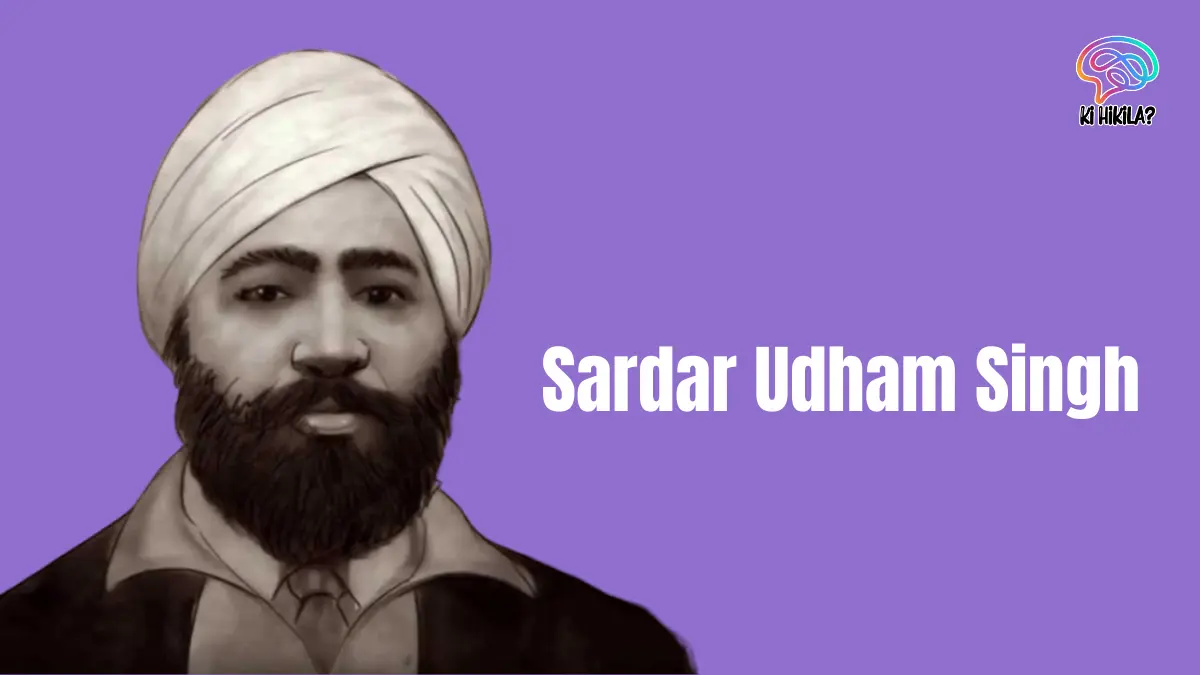
Sardar Udham Singh: The Brave Freedom Fighter Who Avenged Jallianwala Bagh

In the annals of India’s independence struggle, few stories embody unyielding resolve like that of Sardar Udham Singh. As an iconic Indian freedom fighter, he dedicated his life to challenging British colonial oppression, culminating in a bold act of retribution for one of the darkest chapters in Indian history. On July 31, 2025, India observed Shaheed Udham Singh Martyrdom Day, honoring his sacrifice and unwavering commitment to justice. This biography traces his journey from humble beginnings to his lasting place in the hearts of millions.
Thank you for reading this post, don't forget to subscribe!Early Life and Formative Years of Sardar Udham Singh
Sardar Udham Singh, originally named Sher Singh, entered the world on December 26, 1899, in the village of Sunam, located in Punjab‘s Sangrur district. Born into a modest Sikh family, his father, Tehal Singh Jammu, worked as a railway crossing watchman and farmer, while his mother, Narain Kaur, managed the household. Tragedy struck early: his father passed away in 1901, followed by his mother in 1907, leaving young Sher and his elder brother Mukta orphaned.
Orphanage and Renaming
Raised in the Central Khalsa Orphanage in Amritsar, the brothers adopted new names—Udham Singh and Sadhu Singh, respectively. Sadly, his brother succumbed to illness in 1917. These hardships forged Udham’s resilience, shaping him into a determined individual amid Punjab’s turbulent socio-political landscape. Though formal education details are sparse, his orphanage years instilled values of discipline and community service, laying the groundwork for his future as an Indian freedom fighter.
Key Influences: Jallianwala Bagh Massacre and Beyond
The turning point in Sardar Udham Singh’s life came on April 13, 1919, during the Jallianwala Bagh massacre in Amritsar. Present at the peaceful gathering protesting the Rowlatt Act, Udham was serving water to attendees when British General Reginald Dyer ordered troops to fire on the unarmed crowd, killing hundreds and injuring thousands. This atrocity, defended by Punjab’s Lieutenant Governor Michael O’Dwyer, ignited a fire in Udham’s soul. He vowed to avenge the innocent lives lost, a promise that defined his path.
Other Shaping Events
Udham was also moved by the Nankana Sahib tragedy in 1921, where Sikh reformers were massacred. Ideologically, he drew inspiration from Bhagat Singh, the revolutionary socialist whose writings on equality and resistance resonated deeply. These events transformed Udham from a survivor into an active crusader against imperialism.
Revolutionary Activities: From Ghadar Party to Global Exile
Sardar Udham Singh’s entry into organized resistance began in the early 1920s. Traveling abroad, he joined the Ghadar Party in the United States in 1924—a network of expatriate Indians advocating armed revolt against British rule. His global journeys took him to Africa, Europe, and back to India, where he smuggled arms and revolutionary literature to support the cause.
Founding the Azad Party and Arrest
In 1927, upon returning to India, Udham was arrested in Amritsar for possessing unlicensed weapons and Ghadar publications. Sentenced to five years in prison, he used aliases like Ude Singh to evade detection. Post-release, he escaped surveillance, fleeing to Kashmir and then Germany before settling in London in 1934. There, he founded the Azad Party, a group focused on unifying anti-colonial efforts. His adoption of the name Ram Mohammad Singh Azad symbolized harmony among Hindus, Muslims, and Sikhs in the fight for freedom.
Throughout, Udham worked menial jobs—such as a carpenter and motor mechanic—to fund his activities, all while plotting his ultimate act of defiance.
The Assassination of Michael O’Dwyer: A Bold Act of Revenge
After two decades of simmering resolve, Sardar Udham Singh struck on March 13, 1940, at Caxton Hall in London. During a meeting of the East India Association, he shot and killed Michael O’Dwyer, the man who had endorsed the Jallianwala Bagh horrors. Udham also wounded others, including Lord Zetland, but surrendered immediately, declaring, “I have done my duty.” This assassination, exactly 21 years after the massacre, was a direct response to British atrocities, sending shockwaves through the empire.
Trial, Execution, and Martyrdom
Arrested on the spot, Udham Singh’s trial at the Old Bailey in London was swift. Defending himself, he used the platform to condemn colonialism, proudly adopting his symbolic alias. Convicted of murder, he was sentenced to death and hanged on July 31, 1940, at Pentonville Prison. His final words echoed defiance: “I don’t care about the sentence of death. It means nothing at all.”
Udham’s remains were buried in the prison but repatriated to India in 1974, where they were cremated in Sunam amid national honors. Today, July 31 is observed as Shaheed Udham Singh Martyrdom Day, a reminder of his sacrifice.
Legacy of Sardar Udham Singh: An Enduring Symbol of Resistance
Sardar Udham Singh’s legacy as an Indian freedom fighter transcends his lifetime. He represents the unquenchable spirit of those who fought colonial tyranny, inspiring generations through his emphasis on communal unity and justice. Museums in Punjab, like the one in Sunam, preserve his artifacts, while the 2021 film Sardar Udham starring Vicky Kaushal brought his story to global audiences, earning critical acclaim.
His actions highlighted the human cost of imperialism, influencing modern discussions on historical accountability. As India continues to celebrate its independence, Udham Singh’s name stands as a beacon of courage and retribution.
Frequently Asked Questions About Sardar Udham Singh
When was Sardar Udham Singh born and where?
He was born on December 26, 1899, in Sunam, Punjab, India.
What motivated Sardar Udham Singh to assassinate Michael O’Dwyer?
The Jallianwala Bagh massacre of 1919, which he witnessed, drove him to seek revenge against O’Dwyer for supporting the atrocity.
Why did Udham Singh use the alias Ram Mohammad Singh Azad?
It symbolized unity among Hindus, Muslims, and Sikhs in the struggle against British rule.
When is Shaheed Udham Singh Martyrdom Day observed?
It is commemorated annually on July 31, the date of his execution in 1940.
What is Sardar Udham Singh’s contribution to India’s freedom struggle?
As a key member of the Ghadar Party and founder of the Azad Party, he smuggled arms and executed a high-profile assassination to protest colonial brutality.
Sardar Udham Singh’s story reminds us of the sacrifices that paved the way for India’s freedom. Share your thoughts on this remarkable Indian freedom fighter in the comments below, and explore more biographies of India’s heroes on our site.